
Top 5 Benefits of Tracking Your Assignment Grades
Regularly tracking your assignment grades can help you spot problems early, build better study habits, reduce uncertainty, and stay in control of your academic progress.
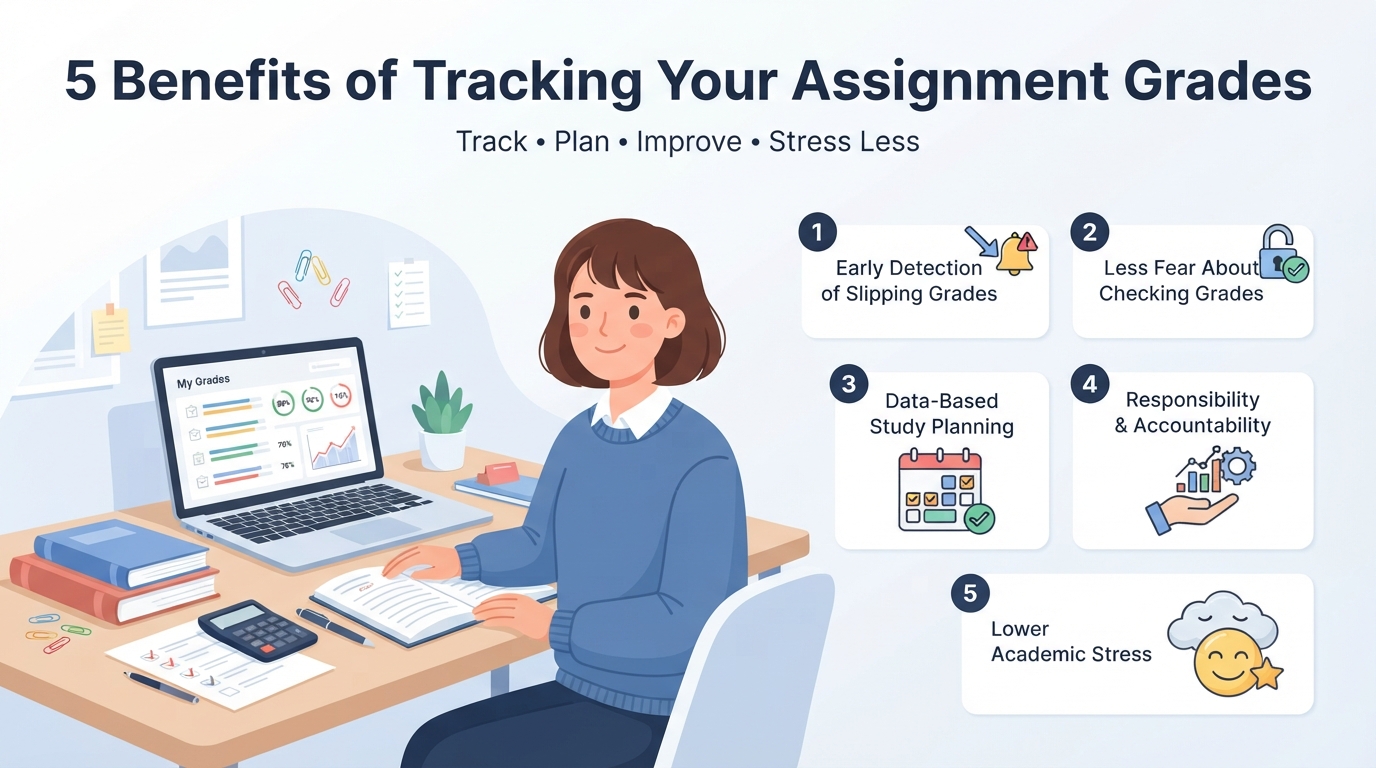
Keeping track of student grades is something many students avoid until it is too late in the school term. Looking at a term with no idea of how you are doing can create a constant feeling of stress that follows you everywhere.
When assignments pile up and exams come near, knowing how to check grades and staying on top of your record can make a real difference. Regular tracking turns a term into a more organized and manageable path to academic success.
Many students use school management software or a quick PowerSchool check grades routine when they become worried about their performance. Waiting until the last minute leaves little time to respond to grade drops or missed work.
By making a habit of checking your grades from the first week of class, you can take greater control of your academic progress. Let us look at the benefits of checking your performance regularly.
1 Early Detection of Slipping Academic Performance
One common mistake in college or high school is realizing you are struggling in a class only after the midterm is over. When you check student grades every week, you can see performance patterns earlier.
Spotting a low quiz score early allows a student to change study habits before a small problem becomes a much larger academic challenge.
Why Early Grade Tracking Matters
Take Marcus, a freshman handling history essays and tough lab reports. Marcus ignored his portal for two months, thinking everything was fine because he had turned in his work.
When he finally logged in to check his grades, he found a missing assignment and a failing quiz that had hurt his average. Finding those problems earlier would have given him more time to address them instead of facing a stressful rush before finals.
Key idea: Checking your academic record regularly works like an early warning system. Finding missing work or unexpected scores quickly gives you more time to respond.
2 Eliminating the Fear of How to Check Grades
For some students, opening a grading portal can cause sudden fear. This fear often comes from not knowing what to expect. Avoiding the numbers can make them seem scarier than they really are.
Checking grades regularly can make the process feel much more familiar and manageable.
Turn Grade Checking Into a Routine
When a student checks scores after assignments are graded, logging into the portal becomes a habit instead of a stressful moment.
You stop seeing the portal as a judge and start seeing it as a helpful tool that provides information about your current academic situation.
Being comfortable with checking grades can build confidence. Regular monitoring replaces fear with a clearer understanding of your current performance.
Once you realize that checking a score is simply a way to receive feedback, the numbers become easier to take seriously and use constructively.
3 Creating a Data-Based Study Plan
Data becomes useful when a student uses it to make changes in daily routines. Vague ideas like "I need to study more" rarely provide a clear direction.
Specific numbers show where extra time and effort may be needed most. Your assignment scores can help you identify subjects or areas that deserve additional attention.
Use Your Grades to Focus Your Study Time
To make this process easier and avoid calculation mistakes, you can use the interactive tools available on the homepage of CalcGrade.
Once a student knows the current grade and understands what score may be needed on an upcoming project to reach a desired grade, study sessions can become more focused and efficient.
Instead of reading textbooks randomly, a student can target areas identified through previous assignment scores. Being precise can save time and help create a more organized study routine.
Make Your Grade Data Work for You
Track your current scores, understand where you stand, and use your grade information to decide where your study time should go next.
4 Building Responsibility and Personal Accountability
Relying on teachers, professors, or parents to track your progress can prevent you from developing as an independent learner. Checking student grades regularly puts more responsibility for understanding your progress in your own hands.
A student learns to connect actions with academic results. When you understand how preparation, submitted work, and practice relate to assessment scores, you can make better decisions about your habits.
Develop Independent Academic Habits
When a student sees that skipping practice sets is followed by weaker quiz scores, that information can encourage a change in behavior.
This accountability can build habits that are useful beyond school. Tracking your performance teaches you how to manage your work, measure your progress, and make changes on your own.
This change in thinking turns education from something that simply happens to you into something you actively manage. You become the leader of your own academic journey.
5 Lowering Overall Academic Stress
Worrying about school can affect your ability to focus and may make academic pressure feel harder to manage. When a student is in the dark about their current performance, the mind can imagine the worst for every class.
Checking grades regularly provides a clearer picture of your academic standing and helps replace uncertainty with information.
Replace Guesswork With Clear Information
Knowing your current standing can give you a better understanding of what has already been completed and what still needs attention.
You no longer have to constantly wonder whether a missed assignment seriously affected your grade. Instead, you can check the available information, identify what needs attention, and plan your next steps.
Key idea: Regular grade tracking replaces guesswork with information. When you know where you stand, it becomes easier to plan your remaining schoolwork.
Frequently Asked Questions (FAQs)
Are student grades private?
In the United States, laws such as FERPA provide protections for student education records. Schools generally cannot disclose protected education records to unauthorized parties without appropriate permission or a legal basis.
How can I check student grades online?
A student can usually check grades online by logging into the school's official student portal with the login details provided by the institution. Platforms such as PowerSchool or Canvas may be used by schools to display grades and other academic information.
How can I change my grades as a student?
Students cannot independently change official grades. If there is a grading mistake or a missing assignment that was submitted, the appropriate step is to contact the teacher or instructor and provide relevant evidence to request a review.
How can I change my grades on PowerSchool as a student?
Students generally cannot directly edit official grades in PowerSchool. If a grade appears incorrect, contact the teacher or school administrator so the record can be reviewed and corrected through the proper process.
Take Control of Your Academic Progress
Taking control of your academic record by checking it regularly is one of the best habits you can form as a student.
When you stop being scared of your numbers and start using them as a guide, school can become easier to manage. Regular checking helps stop surprises, improves your focus, and makes sure you always know where you stand.
Start checking your grades regularly, manage your work carefully, and use your academic progress as a guide for the rest of the term.
Know Where You Stand With CalcGrade
Use CalcGrade to calculate your current grade, understand your academic standing, and make better decisions about upcoming assignments and exams.
Use CalcGrade Free →