
How to Organize Your Syllabus and Track Progress Effectively
Learn how to turn multiple college syllabi, assignments, exams, and deadlines into a simple semester plan that keeps you organized, focused, and on track.
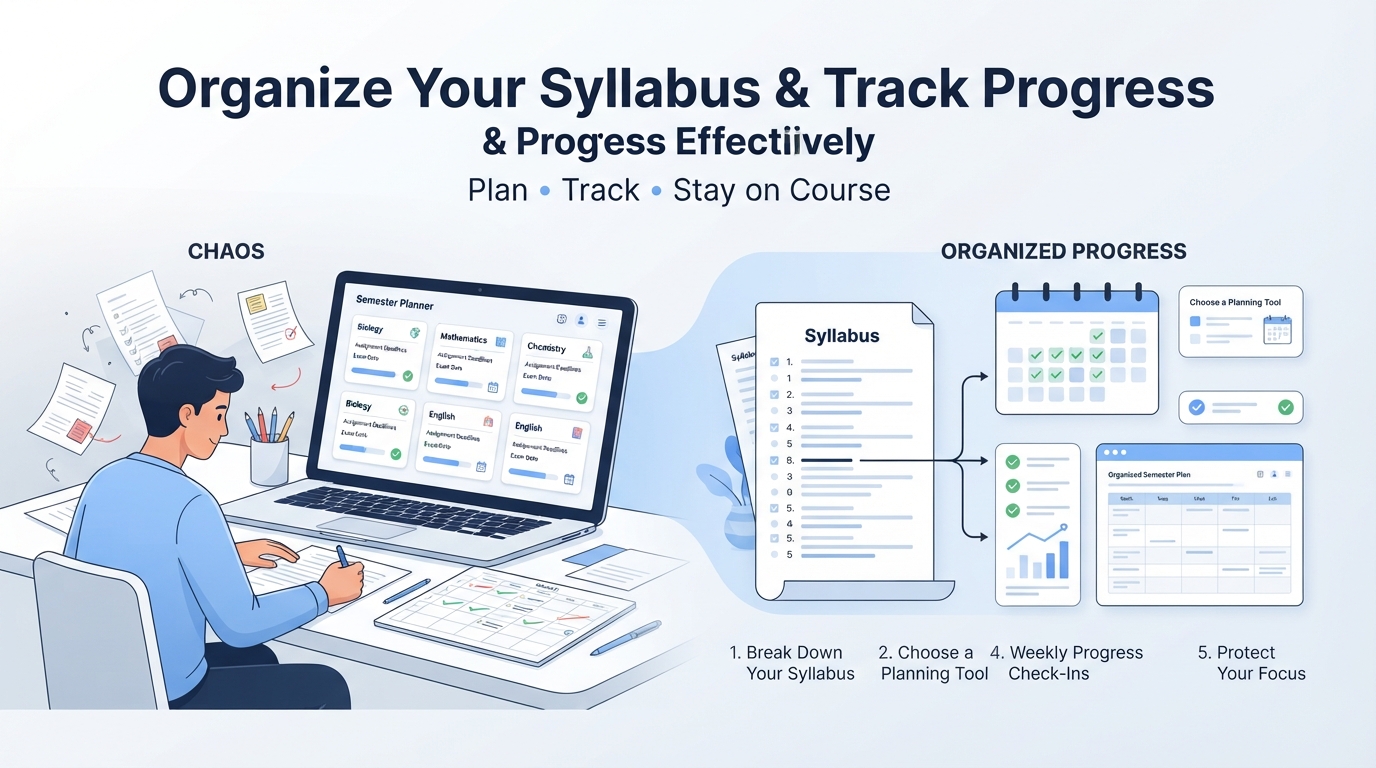
The first week of a college semester always shows up with a massive pile of paper and digital course outlines. Staring down five different syllabi, each one packed with hidden due dates, makes any student want to shut the laptop and walk away for a while. Without a real system in place, keeping up with assignments turns into a stressful guessing game. Once you actually learn how to track your progress, those chaotic documents become a clear, manageable path instead.
Every professor formats things differently, which makes it hard to get a sense of the bigger picture at a glance. As assignments start piling up, knowing how to track a project's progress and having a solid semester planner going saves you from hitting a wall of burnout. Getting the semester structured early on gives you the mental breathing room you actually need to focus on learning.
Building that foundation early also means you're never blindsided by a surprise quiz, an unannounced group project, or two exams landing in the same week. Spend a little time mapping out your academic landscape in the first few days, and you'll switch chaotic scrambling to something closer to structured momentum.
The goal isn't to create a complicated planning system. It's to create one reliable place where you can see what is due, what you've completed, and what needs your attention next.
Break Down Your Syllabus on Day One
The biggest trap students fall into is tossing the syllabus into a folder and forgetting it exists until midterm week rolls around. Your syllabus is essentially the operational map for the whole term - pull every due date, exam window, and grading weight out of it right away.
Take Marcus, a sophomore juggling organic chemistry and economics. He used to wait until two days before an exam to even check which chapters were covered. Once he began building a proper semester planner during the first weekend of the term, mapping out every deliverable ahead of time, the midnight panic stopped and his grades stabilized.
Breaking down your syllabi on day one also shows you how each professor actually structures their grading. Some classes lean heavily on weekly quizzes, others hinge entirely on two big exams. Spotting that difference early lets you put your weekly study hours exactly where they matter, instead of wasting effort on low-impact busywork.
- Record every assignment deadline.
- Add quiz and exam dates.
- Note major projects and presentations.
- Record important grading weights.
- Mark deadlines that may require extra preparation.
Pick Your Tool: Digital vs. Paper Planning
Some students swear by colorful paper planners, others live entirely in cloud apps on their phone. Honestly, the medium matters a lot less than how consistently you update it. Whatever you choose, it needs to be something you can open and use in two seconds.
When you're figuring out how to track your progress, go with a tool that sends reminders without demanding hours of upkeep. If a planner takes longer to decorate than to actually update, you'll abandon it by week four. Keep the layout clean, simple, and purely functional.
The real secret to sticking with a planning system long-term is frictionless entry. If adding one homework assignment means opening three apps and logging in with a password each time, procrastination wins. Pick tools that sync across your laptop and phone so capturing a new deadline becomes automatic instead of a chore.
Break Big Projects Into Manageable Pieces
Major research papers or complex lab reports tend to paralyze students simply because they look huge. Staring at a ten-page final essay due three months out makes your brain want to procrastinate on the spot. The trick is breaking that big project down into weekly micro-milestones instead.
Turn One Deadline Into Several Small Goals
To take the manual math and guesswork out of tracking things like this, the free interactive tools on CalcGrade's homepage can help.
Instead of writing a vague note like "research paper due November 15," split it into smaller chunks - outline by Friday, gather sources by Monday, and so on. Checking off these small wins builds momentum and cuts out the last-minute chaos entirely.
Once a massive project gets reduced to bite-sized daily actions, the psychological weight of it mostly disappears. You stop dreading the final outcome and start focusing purely on the small, doable task in front of you today.
Weekly Check-Ins: The Real Secret to Staying on Track
A schedule you never review is really just a decorative list of good intentions. Every Sunday evening, take fifteen minutes to check in on your progress - what got done, what slipped through the cracks, and what's coming up next.
Adjusting your plan in real time stops small delays from turning into missed deadlines. If a heavy reading assignment took longer than expected, shift your upcoming tasks around before you fall behind. Regular check-ins keep your planner actually accurate instead of just aspirational.
Think of it like a pit stop during a long race - a chance to check your fuel, gauge your speed, and correct course before the next sharp turn. Skip that reflection, and even a well-designed schedule can quietly fall apart before you even notice.
Protect Your Focus From Academic Overload
Getting organized isn't just about squeezing more work into your day - it's about protecting your mental energy. Once your syllabus is mapped out clearly, you stop burning cognitive power wondering what you should be doing next.
Knowing your workload is actually under control gives your brain permission to rest on weekends. Solid tracking habits kill that background anxiety of forgotten tasks. You walk into each week knowing exactly where your time is going.
By offloading the memory work onto a system you trust, your mind gets freed up for deeper thinking and actual problem-solving. That mental relief can make it easier to focus on learning and retain complex material.
Frequently Asked Questions
It's an organizational tool, digital or physical, built to help students track assignment deadlines, exam dates, and daily study schedules.
Start by listing your fixed commitments - classes, work hours - and block out study sessions around your most productive times, breaking bigger subjects into manageable daily goals.
Regularly compare what you've completed against your syllabus milestones, log your test scores, and check in on where you stand week by week.
A few weeks before classes start is ideal - gather your syllabi, set up your tracking system, and map out the major semester deadlines early.
It's the official timetable from your school listing the days, times, locations, and instructors for each of your classes during the term.
Take Control of Your Semester
Once you actually master tracking your progress, your whole college experience changes from a reactive scramble into something you're steering on purpose. Turn those dense syllabi into structured action steps inside a planner you trust, and a lot of that academic stress fades.
Take charge of your semester now, build the habit early, and set yourself up for the long run.
Ready to Track Your Grades?
Use CalcGrade to understand where you currently stand and plan ahead for the grades you want to achieve.
Try CalcGrade Free